Wednesday, July 25, 2018

Moore's Ford: The Nation's Last Mass Lynching


Moore's Ford Lynching historical marker

The slayings of George and Mae Murray Dorsey and Roger and Dorothy Malcolm by a white lynch mob occurred on July 25, 1946 near the Moore’s Ford Bridge on the Appalachee River between the Walton and Oconee counties. The brutal killings seized national headlines and triggered a federal response. Compelled to act, President Harry S. Truman dispatched FBI agents to Georgia to investigate the murders. President Truman also issued an executive order in December 1946 establishing the President’s Committee on Civil Rights, which issued a host of recommendations including federal anti-lynching legislation. Faced with uncooperative witnesses, however, U.S. attorneys declined to seek indictments, and intransigent lawmakers—chiefly representing southern states—blocked anti-lynching legislation in Congress. 

Governor Roy Barnes ordered the case reopened in 2001, and the Federal Bureau of Investigation followed suit in 2006. State and federal officials closed the case in December 2017, and the nation’s last mass lynching remains unsolved. 

FBI ballistics report from 1946
The Russell Library houses a number of Moore’s Ford related collections. The records of the Moore’s Ford Memorial Committee, donated by Richard Rusk and Rosemary Woodel, document the efforts of black and white citizens of Walton and Oconee counties to commemorate the slayings, seek justice for the Dorseys and Malcolms, and endow memorial scholarships for local students. The Samuel J. Hardman Research Files include a number of documents produced by the FBI during its 1946-47 investigation. Copies of investigation summaries, witness reports, description of physical evidence, internal bureau communication, and an article penned by Hardman feature prominently.

These and other collections are currently open for research.

Ashton Ellett

Friday, July 20, 2018

Remembering Tom Crawford

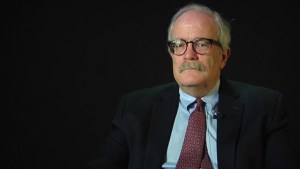
Tom Crawford giving an oral history interview at the Russell Library in August 2017 
I met Tom Crawford on the third-floor landing of the Hull Street Parking Deck early one morning late last August. We had arrived almost simultaneously for our scheduled interview, and Tom had paused at the landing to knot his burgundy, patterned necktie. We walked together up the slope to Russell Special Collections Libraries building where we spent the remainder of the morning and early afternoon discussing history, politics, and the business of covering politics.

Crawford interviewing Johnny Isakson circa 1974
Tom Crawford, Dean of the State Capitol Press Corps, died Wednesday morning after waging a decades-long battle against cancer. A quick wit and, according to all accounts, an even quicker typist, Tom’s journalism career actually began here in Athens. A 1968 graduate of Clarkston High School, he had opted for UGA over Georgia Tech and majored in journalism. He worked at the student-led Red & Black, rising to rank of sports editor. Tom graduated with honors in 1972 and began his professional career as a beat reporter at the Alabama state capitol for the Montgomery Advertiser.

From 1972 to 1983, Tom worked at the Advertiser, Atlanta ConstitutionMarietta Daily Journal, and Atlanta Journal reporting on local, county, and state politics. He became a fixture on the campaign trail and under the Georgia Gold Dome during those hurly-burly legislative sessions of the 1970s and early 1980s. Although it surely did not seem so at the time, Tom was witnessing what one of his colleagues, the late David Nordan, dubbed the end of “southern gothic” politics in the state. Indeed, Tom chronicled the relatively swift, if excruciatingly overdue, modernization of Georgia’s political system.

Tom stepped away from reporting in 1983 and assumed an accounts executive position at Pringle Dixon Pringle, a full-service public relations agency in Atlanta. From writing company newsletters and corporate speeches to coordinating press conferences and media interviews, the job proved a perfect fit for someone with Tom’s skill set.
He also dabbled in speechwriting during the 1980s and 1990s. One supposes that after hearing and reporting on enough speeches delivered by others on the stump and from the House and Senate wells that Tom figured he would try his hand at crafting his own for public consumption.

Already a print media veteran, Crawford blazed a trail for online journalists and bloggers in the state when he launched Capitol Impact­—now known as Georgia Report—in 2000. Like countless others, I first encountered Tom through his weekly columns that appeared in more than 35 newspapers across the state. Another equally important aspect of the Georgia Report was its subscription service targeted at the lawyers, lobbyists, and myriad other political insiders who relied on Tom’s timely reporting and insightful analysis.
Crawford and a colleague at the Capitol

Indeed, those same qualities convinced me to send Tom an email last August requesting an interview with him for the Russell Library’s Two-Party Georgia Oral History Project. The reply I received was Tom Crawford distilled, and it is worth quoting in full.


“That’s an interesting proposal you have passed along. I’m curious: why would you want to interview me? I’m just an obscure journalist who has written on occasion about state government and politics. Few people know who I am; most who meet me face-to-face assume that I’m [Atlanta Journal-Constitution lead writer] Jim Galloway (which, I can assure you, I’m not).
I should point out that your title for this effort, ‘Two-Party Georgia,’ is a bit of a misnomer. Georgia is and always has been a one-party state. It was formerly a one-party state controlled by Democrats and is now a one-party state controlled by Republicans. Same difference, as far as I can see.
I’d be happy to assist in this project, although I’m not sure how much I could add.”
Needless to say, Tom Crawford contributed mightily to our understanding of Georgia politics over the years. Not only did Tom sit for an oral history interview, but he also donated his papers to the Russell Library. Those papers, which include columns from every stage of his journalistic career as well as his reporter’s notebooks, are currently being processed. His collection awaits seasoned researchers seeking Tom’s observations on countless, hot-button political topics as well as eager students and budding journalists discovering Tom Crawford for the very first time.  

Tom Crawford’s Two-Party Georgia interview can be viewed on the Russell Library Oral History Program’s YouTube page at https://www.youtube.com/watch?v=TWGTUA7DkdU&t=4s.   

Ashton Ellett

Tuesday, April 10, 2018

Build Civic Knowledge On Your Lunch Break!


This April the Richard B. Russell Library invites attendees to consider the powers and function of the U.S. Congress through an event series titled Civic Knowledge, Civic Power. This weekly program hosted from 12:30-1:30 p.m. looks to increase civic knowledge on campus and in the community with short lectures and informal discussion from speakers in UGA’s Department of Political Science
The powers of the United States Congress are considerable and well established. Congress can collect taxes, coin money, declare war, raise and support armies and a navy, and make all laws necessary and proper to carry out its powers – just to name a few. But understanding Congress cannot be done in a vacuum or just through a listing of powers

Hosted for the first time in 2017, the weekly lunch-and-learn series was created as a way to promote greater understanding at a time when surveys show declining levels of knowledge and confidence in Congress. “A 2016 survey conducted by the Annenberg Public Policy Center found that citizen knowledge of government basics is at a new low,” said outreach archivist Jan Hebbard. “At a time when many citizens seem increasingly interested in playing a more active role in politics, we wanted to create a space for informal learning about this branch of government and its history.” Last year’s events were so successful, the event series will now happen annually, hosted in tandem with the national Congress Week initiative each April.

At each event featured speakers will address a selected topic, beginning on April 3 with Dr. Anthony Madonna discussing how a bill becomes a law, with a particular focus on recent efforts to reshape the Affordable Care Act. Other topics on the schedule include how elections work; balancing the federal budget; and polarization in Congress. Organizers hope addressing issues that have garnered widespread attention since the 2016 presidential election will engage people from both the campus and community. “We try to keep our programming connected both to our collections, and to current events – helping people to draw connections between the past and present,” said Jill Severn, head of access and outreach for the Russell Library. 

Partners for the series include the University of Georgia’s School of Public and International Affairs, the UGA College Republicans. For more information contact russlib@uga.edu or call 706-542-5788.

Tuesday, April 3, 12:30-1:30
Lunch & Learn, How a Bill Becomes a Law (Healthcare Redux)
Room 277, Richard B. Russell Building Special Collections Libraries)

Tuesday, April 10, 12:30-1:30
Lunch & Learn, Balancing the Federal Budget
Room 277, Richard B. Russell Building Special Collections Libraries)

Tuesday, April 17, 12:30-1:30
Lunch & Learn, How Campaigns Work: 2018 Mid-Term Elections 
Room 277, Richard B. Russell Building Special Collections Libraries)

Tuesday, Apr. 24, 12:30-1:30PM
Lunch & Learn, Polarization in Congress
Room 277, Richard B. Russell Building Special Collections Libraries)

Wednesday, April 04, 2018

Lecture to Spotlight Ongoing Ethics Debate in Congress

Can the American Congress be ethical in an age of intense partisan warfare? Princeton University professor and CNN political analyst Julian E. Zelizer will take up the topic of ethics in Congress on Thursday, April 5 at 4 p.m. in the auditorium of the Richard B. Russell Building Special Collections Libraries.
Titled, “Ethics in the Age of Partisan Warfare,” Zelizer’s talk will explore past debates over ethics reform, as well as the push for new oversight and enforcement on the heels of growing allegations of sexual misconduct in Congress. In a recent op-ed piece for The Atlantic, Zelizer submitted that the legislative branch botched a chance to curtail sexual harassment in the 1990s and illuminated the failures of the rules and regulations put into effect in that decade. 

Dr. Julian Zelizer, Princeton University Professor
and CNN political analyst
“Unlike the other institutions rocked by harassment scandals this past year, the inner workings of Congress remain a mystery to the American people,” said Russell Library director Sheryl Vogt. “As a founding member of the Association of Centers for the Study of Congress (ACSC), the Russell Library wants to promote a better public understanding of Congress as the branch of government closest to the people. Julian Zelizer is the ideal scholar to enlighten us about the partisanship and ethics scandals that characterize that elective body today.”

The author of numerous books, articles and op-eds, including a weekly column on CNN.com, Zelizer has been one of the pioneers in the revival of American political history. His current book project focuses on the ethics scandal that ousted Congressman Jim Wright from his position as Speaker of the House in 1989. “This was the moment,” Zelizer explains, “when the hopes of the post-Watergate reforms faded into the darkness of rampant partisanship in Congress.”  

The lecture complements a slate of lunch-and-learn programs the Russell Library will host during the month of April which look to increase civic knowledge and awareness on campus and in the community. Promoted collectively under the Civic Knowledge, Civic Power moniker, the series will feature speakers from the UGA Department of Political Science and address topics focused on Congress, its powers and responsibilities. The series was inspired by the ongoing Congress Week initiative, an annual program of ACSC.

“Ethics in the Age of Partisan Warfare” is free and open to the public; a light reception will follow the program. The event is co-sponsored by the Richard B. Russell Library for Political Research and Studies, the University of Georgia’s School of Public and International Affairs and the Department of History For more information call 706-542-5788 or email jhebbard@uga.edu.  

Thursday, March 29, 2018

Recap: 4th Annual School Lunch Challenge

This Year's Winners...

Each year we give out two awards at the School Lunch Challenge -- our overall champion, determined by our panel of student judges (students in grades 2-12 drawn from schools in the Clarke County School District) and our crowd favorite, voted on by all attendees at the event. This year for the first time in our competition's history, the same team won both awards! Dondero's Kitchen's chicken fajitas and spiced roasted sweet potatoes won over adults and kids alike! This winning dish will be incorporated into the school lunch menu for the Clarke County School District during the 2018-2019 school year. 

Taziki's Mediterranean Cafe came in a close second in the crowd favorite voting with their pizadilla served with chopped salad. The Food Bank of Northeast Georgia came in second in the crowd favorite voting for their turkey, cheese & veggie panini served with steamed broccoli with lemon zest. As always, the voting this year was incredibly tight, and we are grateful to all of our teams for their efforts in creating such delicious dishes! A full listing of our participating restaurants, chefs, support staff, and dishes can be found below. 

As always, our teams all did a great job creating dishes that met the USDA nutrition guidelines and which met the cost ($1.50 per full plate produced) and time restrictions (1.5 hours to prep and serve) provided to them. We thank all of our chefs, volunteers, and sponsors for making this event happen! Photos from the event are available on the Russell Library's Facebook Page.

Politics in Everyday Life

This even was inspired by the exhibition, Food, Power, and Politics: The Story of School Lunch, produced by the Richard B. Russell Library for Political Research and Studies in 2015. Georgia's Senator Richard B. Russell co-sponsored the National School Lunch Act, passed in 1946, which created the National School Lunch Program. Our staff produced the School Lunch Challenge to connect people to food, history, and each other -- and to highlight the ongoing impact that a single piece of legislation can have on the daily lives of citizens. 

If you are interested in learning more about legislative history or politics in Georgia, please visit our website to browse our collections, or stop in to visit our reading room or exhibit gallery at the Richard B. Russell Building Special Collections Libraries on the UGA campus. The building is open to the public Monday through Friday from 8:00 a.m. to 5:00 p.m. and on Saturdays from 1:00 p.m. to 5:00 p.m. Interested in scheduling a group tour? Fill out our online tour request form or stop by for our weekly Tuesday Tour at 2PM.

It Takes a Village! Thank You to Our 2018...

Event MC
Dr. Caree Cotwright

Event Sponsors
Richard B. Russell Library for Political Research and Studies
Clarke County School District
Mayfield Dairy Farms
Athens-Clarke County Solid Waste Department
College of Family and Consumer Sciences, UGA
Department of Foods and Nutrition, UGA
The Fresh Market
Seed Life Skills
Athens Land Trust
Athens Farm to School
Heirloom Cafe and Fresh Market

Competing Teams
Last Resort Grill
Chefs: Larry Vivian, Jordan Sanchez
Menu: Macaroni & Cheese with Chicken & Cheetos Cauliflower
CCSD Volunteers: Sara Sheridan, Sonya Lawrence, Teresa Sisson

Dondero's Kitchen
Chefs: Tim Dondero, Isabella Westrich
Menu: Chicken Fajitas & Spiced Roasted Sweet Potatoes
CCSD Volunteers: Jenissa Gordon, CIndy Lane, Yinelis Hernandez

Taziki's Mediterranean Cafe
Staff: Whit Richardson, Ana Camacho
Menu: Pizadilla with Chopped Salad
CCSD Volunteers: Chelsea Freeman, Ana Vaca, Dawn Baker

Food Bank of Northeast Georgia
Staff: Beegee Elder, Tracey Massey
Menu: Turkey, Cheese, & Veggie Panini with Steamed Broccoli with Lemon Zest
CCSD Volunteers: Larkin Kelly, Selene Huato, Michelle Lawrence


Demonstration Chefs
Charles Hay (The Olive Basket)
Ashley Na & Renee Smith (Athens Land Trust)
Brent Plagenhoef (Taqueria del Sol)
Rachel Hicks (Young Urban Farmers)


Information Table Hosts
Athens Farmers Market
School Garden Network/Keep ACC Beautiful
Richard B. Russell Library
Food Bank of Northeast Georgia
Strong Girls
Northeast Georgia Dietetic Association (NEGDA)
UGA Peer Nutrition Educators
Athens Area Master Gardeners
Athens Clarke County Solid Waste Department
Oconee River Greenway Commission

Planning Committee
Caree Cotwright
Connie Roberts
Hillary Savage
Jessica Rothacker
Jill SEvern
Joe Dunlop
Paula Farmer
Stacy Smith
Rachel Watkins
Jan Hebbard
Kelsey Thompson


Wednesday, February 28, 2018

The Peanut Gallery

Rep. Lindsay Thomas poses with
Georgia Peanut Princess, ca. 1980s.
Robert Lindsay Thomas Papers
What do the U.S. Navy, the National School Lunch Program, and the former Soviet Union have in common? Why, peanuts of course!

The new installation inside our History Lives Gallery explores Georgia's second largest cash crop through the lenses of our six key collecting areas: politics, public good, social relations, environment, economy, and peace and war. Assembled by volunteer researcher Bill Hugunine, the selection of items on display provides a series of stories about peanuts, from World War II through the 1990s, found in the Russell Library’s collections. Be sure to stop by on your next visit to the Russell Library Gallery!

Do you have a suggestion for what topic we should take on next in the gallery? Tweet your idea to @RussellLibrary and it may be the next to appear! 

Monday, January 29, 2018

Campus and Community Partners Host 4th Annual School Lunch Competition

Local chefs will once again take on the School Lunch Challenge March 24, creating tasty dishes that meet USDA requirements for the National School Lunch Program. Attendees will have a chance to sample the creations at the cooking competition from 12-1:30 p.m. in the cafeteria of Whitehead Road Elementary School. 

Building on increased interest in the National School Lunch Program, and inspired by the 2014 exhibition, Food, Power,Politics: The Story of School Lunch, the Richard B.Russell Library for Political Research and Studies and others partnered in 2015 to create this fun, educational event to engage the Athens community with the past, present, and future of school lunch. “Richard Russell co-sponsored the legislation which created the National School Lunch Program in 1946. We are glad to host this event, now an annual happening that draws attention to the NSLP today,” said organizer Jan Hebbard, outreach archivist at the Russell Library. 

The 2018 event will offer 200 free tickets to the general public. The centerpiece of this event is a cooking competition which invites participating teams, advised by nutritionists from the Clarke County School District (CCSD), to create dishes in accordance with USDA guidelines for the National School Lunch Program. A panel of student judges drawn from CCSD schools will vote to determine an overall winner. The winning team’s plate will be incorporated into the CCSD school lunch menu during the 2018-2019 school year. 

Students from the Clarke County School District serve as judges at the competition,
taking notes and voting for their favorite dish. 
Last year local restaurant Last Resort Grill was voted the overall winner by student judges. Led by chef Larry Vivian, the team won over judges with a chicken parmesan sandwich paired with honey thyme glazed carrots. This recipe debuted on the CCSD School Lunch Menu in September 2017. The Last Resort team will return in 2018 to defend their title against new competitors Taziki’sMediterranean Cafe, Dondero’s Kitchen, and the Food Bank of Northeast Georgia

Members of the Last Resort team celebrate their victory after being named
2017 Overall Champions by the student judging panel. 
The 2018 event will include cooking demonstrations from local chefs, focused on healthy snacks and meals that can be prepared by kids. Organizations connected to sustainable agriculture, community gardens, childhood nutrition, and farm to school programs in the Athens area will host information tables alongside a display of historical documents and artifacts related to the history of the National School Lunch Program. This year's event will also feature the Junior Food Fight, a live cooking competition in which two teams of high school students from the Athens Land Trust’s Young Urban Farmers program will compete to create dishes based on an assigned seasonal ingredient.

A family attending the event stops to learn more about
Keep Athens-Clarke County Beautiful (KACCB), one of the information table hosts
at the 2017 School Lunch Challenge. 
 The event is free and open to the public but attendance is limited. Tickets are available beginning Feb. 24 through the Eventbrite website. Attendees are encouraged to bring donation items to benefit the Food 2 Kids program operated by the Foodbank of Northeast Georgia. Requested items include jars of peanut butter, individual oatmeal packs, beef ravioli (pop top cans), chicken and rice (pop top cans), spaghettios with meatballs (pop top cans), mac and cheese (individual dry packs), and granola bars. 

Students in the Athens Land Trust’s Young Urban Farmers program
cook on stage during the event, competing in the first ever
Junior Food Fight event. 
The 2018 School Lunch Challenge is sponsored by the Richard B. Russell Library for Political Research and Studies, the Clarke County School District, Mayfield Dairy Farms, the Athens-Clarke County Solid Waste Department, UGA’s College of Family and Consumer Sciences and Department of Foods and Nutrition, The Fresh Market, Seed Life Skills, Heirloom Café Athens, Athens Land Trust, and Athens Farm to School.


To obtain tickets visit https://schoollunchchallenge2018.eventbrite.com

For more information, contact Jan Hebbard at jhebbard@uga.edu or (706) 542-5788. 

Wednesday, January 03, 2018

UGA Special Collections Libraries Recruiting for Volunteer Tour Guide Program

The University of Georgia’s Richard B. Russell Building Special Collections Libraries is now accepting applications for participants in its docent program.  

The Docent Corps is made up of a group of volunteers who provide tours of the exhibit galleries to visitors, ranging from second graders to senior citizens. Docents are trained to highlight permanent and rotating exhibitions and to help increase awareness of the many resources offered by the three special collections libraries: The Hargrett Rare Book and Manuscript Library, The Walter J. Brown Media Archive and Peabody Awards Collections, and The Richard B. Russell Library for Political Research and Studies

“Participation in the docent program requires a substantial commitment of time and energy on the part of volunteers, but can be tremendously rewarding,” said Jan Hebbard, outreach archivist with the Russell Library for Political Research and Studies, who coordinates the program. 

A 10-week training program, hosted from Feb. 13 through April 17, will provide an opportunity for docents to meet curators, archivists, and other special collections staff; learn about the collections and techniques for leading tours; and become familiar with all parts of the special collections libraries building. Follow-up monthly meetings throughout the year will provide continued opportunities to learn about new exhibits and programs sponsored by the libraries. All candidates selected for admission to the docent program will be required to submit to a background investigation. 

“We are looking for applicants who are enthusiastic, flexible, and open to working with visitors of all ages,” Hebbard said. “We don’t require prior experience in the arts and humanities, but a love of history and experience with teaching or public speaking is desirable.” 

For more information about the training schedule and expectations, please visit the FAQ’s page. Applications must be submitted by Friday, Jan. 12, 2018. Please direct any questions to Jan Hebbard at jhebbard@uga.edu or (706) 542-5788.  

Interested individuals can apply online by visiting: 

Wednesday, October 25, 2017

Wrestling Temptation Examines Georgia’s History with Alcohol


Cartoon, "The New Recruit,"
Atlanta Constitution, 1908.
Say the word prohibition to most people and they think immediately of flappers and gangsters, jazz music and speakeasies -- cultural hallmarks of the 1920s. The 18th amendment to the Constitution banned the manufacture, sale, and transportation of alcohol in the United States and national Prohibition (with a capital P) lasted from 1920 until 1933. A lesser known story is that Georgia was the first among many southern states to go dry long before the national measure, and it remained so even after repeal. A new exhibit opening November 9th inside the Russell Library Gallery provides a more sober, local look at prohibition in Georgia.

In Wrestling Temptation: The Quest to Control Alcohol in Georgia the period of national Prohibition is just one chapter in a much longer story tracing the struggles of state leaders in dealing with the regulation of alcohol and accompanying issues of morality, economy, and personal liberty. “We wanted this exhibit to provide a serious look at the history of alcohol in Georgia, from colonial times to the present,” said Jill Severn, Russell Library’s head of access and outreach. Shortly after Georgia’s founding, alcohol became both a mainstay of daily life and a source of conflict between inhabitants and the Trustees who governed them. James Oglethorpe reported that colonists became unruly and lazy under the influence and were corrupting the native population by trading in alcohol. In 1735, Trustees responded with the Georgia Rum Act, prohibiting the sale and use of rum and brandy within the colony and establishing an enforcement officer and a set of graduated fines. Visitors to the exhibit will find a facsimile of Oglethorpe’s original letter to the Trustees on display, part of the Hargrett Rare Book and Manuscript Library’s collection.  

In development for more than two years, the exhibit was spearheaded by guest curator Kaylynn Washnock, a PhD candidate in the University of Georgia’s Department of History. In researching the story of alcohol in the state, Washnock spent hours reading through newspaper articles and copies of legislation to untangle the who’s and why’s of prohibition in Georgia. “Legislators in the state were driven by many of the same forces that pushed the issue on the national level. Early on, that was temperance groups like the Women’s Christian Temperance Union who fought for the welfare of women and children,” said Washnock.  At the behest of the Georgia chapter of the Women’s Christian Temperance Union (WCTU), the first Local Option Bill was presented to the Georgia legislature on July 14, 1881. The bill proposed granting localities the right to vote for or against the sale of liquor after one-tenth of registered voters in a county signed a petition requesting a special election. Though defeated initially, the bill passed when proposed again on July 28, 1885.
Governor Hoke Smith signing the prohibition bill, 1907.
Georgiana Vertical Files, Hargrett Rare Book and Manuscript Library. 

In the years that followed pro-temperance forces pushed for a statewide prohibition measure. The bitter gubernatorial race of 1906 fed rising racial tensions in the state and tipped the scales in favor of prohibition. That year, Hoke Smith and Clark Howell, editors of Atlanta’s two leading newspapers, faced off in a bitter campaign targeting black-owned and operated saloons on Decatur Street. On September 22, 1906, anti-black rhetoric turned deadly. For three days violence raged in the streets as white mobs battered, shot, and lynched African Americans throughout the city. News of the incidents spread across the country and around the world. Prohibitionists capitalized on the notoriety of the Atlanta Race Riot, as it became known, blaming liquor for the violence and using the episode as leverage in the fight for a statewide measure. On August 6, 1907 Governor Hoke Smith signed into law the Hardman-Neel-Covington Act outlawing the sale or manufacture of alcohol in public or at any place of business in the state. 

Volunteer researcher Bill Hugunine played another essential role on the exhibits team, spending time each week combing through the collections to find just the right documents to tell the story of alcohol in Georgia. His favorite find? “Definitely the diary of Marcus Wayland Beck,” says Hugunine. “He was a successful lawyer and later judge on the Georgia Supreme Court who struggled privately with alcohol addiction.” Beck’s private journals detail that during statewide prohibition he was able to obtain alcohol easily through membership in a private club, a short lived loophole in the law, and extra legally through bootleggers and at speakeasies. Temperance forces at the time saw alcoholism as a moral failing rather than a disease, and as such sought only to prohibit consumption rather than offering support or counseling. It was only in the 1930s that societal opinions about alcoholism began to shift and support groups like Alcoholics Anonymous (AA) were founded.   

Volunteer researcher Bill Hugunine examining the
Marcus Wayland Beck diaries.

Flyer, "For Your Safety, 1967."
William Armstrong Smith Papers,
Richard B. Russell Library. 
Drawing from more recent political collections, the exhibit ends with a section detailing the laws governing alcohol in the state today, including the “Georgia Beer Bill” (SB 85) which permits breweries and distilleries to sell directly to consumers as of September 1, 2017. A final text panel and series of question boards near the exit prompt visitors to consider how the issues of the prohibition debate in many ways mirror ongoing discussions about the legalization of marijuana. From colonial times to the present, Wrestling Temptation will give visitors a look at the long history of alcohol regulation in Georgia employing documents, photographs, and artifacts from institutions and private collectors around the state to tell the story. A reception celebrating this exhibit, and other new displays at the Richard B. Russell Building Special Collections Libraries will take place on November 9th from 5:30-7:30 p.m. For more information on the exhibit or event contact Jan Hebbard at 706-542-5788. 

Friday, August 25, 2017

Nationally Touring Exhibit Visits Russell Library

ATHENS, Ga -- During the era of Prohibition Americans could no longer manufacture, sell, or transport intoxicating beverages. Spirited: Prohibition in America, a new exhibition opening Sept. 1 at the UGA Special Collections Libraries explores this tumultuous time in American history, when flappers and suffragists, bootleggers and temperance lobbyists, and legends, such as Al Capone and Carrie Nation, took sides in this battle against the bottle.

Men and women drinking beer in rural setting, 1915.
Courtesy Culver Pictures, Inc.
Visitors to the exhibit will learn about the complex issues that led America to adopt Prohibition through the 18th Amendment to the Constitution in 1919 until its repeal through the 21st Amendment in 1933. The amendment process, the changing role of liquor in American culture, Prohibition’s impact on the roaring ‘20s, and the role of women, and how current liquor laws vary from state to state are among the topics addressed.

In 1830, the average American consumed 90 bottles -- or about four shots a day -- of 80-proof liquor each year. Saloons gained notoriety as the most destructive force in American culture, where men would drink away their families’ money. Following extensive campaigning and lobbying by the Anti-Saloon League along with groups representing women’s suffrage and the Woman’s Christian Temperance Union, on Jan. 16, 1919, the 18th Amendment to the Constitution was ratified and beginning January 17, 1920, Americans could no longer manufacture, sell, or transport intoxicating beverages.

On the eve of Prohibition, Detroit, 1919.
Courtesy Walter P. Reuther Library, Wayne State University.
In the years following, the country was split between “wets” and “drys,” speakeasies flourished, legal authorities gave chase to gangsters, and many created inventive ways to circumvent the law. Along with rampant law breaking, Prohibition brought unexpected cultural and societal shifts from the development of mixed-gendered speakeasies to the growth of organized crime syndicated into national enterprises. The exhibition draws on the histories told from both sides of this divisive issue that riled passions and created volatile situations.

An opening event hosted by the Richard B. Russell Library for Political Research and Studies in collaboration with the University of Georgia Press and University of Georgia Department of History will take place on Thursday, September 7 at 5:30 p.m. in the Russell Building Special Collections Libraries. The event features a performance of prohibition era songs and stories by noted beverage historian Elizabeth Pearce, classic cocktail demonstrations by expert mixologist Jerry Slater, and tours of the exhibition.

Spirited: Prohibition America is based on the exhibition American Spirits: The Rise and Fall of Prohibition, organized by the National Constitution Center, in collaboration with Daniel Okrent, author of Last Call: The Rise and Fall of Prohibition. Spirited has been made possible through NEH on the Road, a special initiative of the National Endowment for the Humanities. It has been adapted and toured by Mid-America Arts Alliance. Founded in 1972, Mid-America Arts Alliance is the oldest regional nonprofit arts organization in the United Sates. For more information, visit www.maaa.org or www.nehontheroad.org.